
The Complete Research Peptide Catalogue
A comprehensive guide to every research peptide Pharma Lab offers, organised by scientific focus area. Over sixty compounds described clearly enough for a working researcher to determine relevance to their work.
Navigating the Pharma Lab Range

This page serves as a complete and unabridged guide to the research peptides available through Pharma Lab. The compounds are categorised by their primary scientific focus area and described with sufficient detail that a working researcher can decide whether each is relevant to their work. There is no filler and no promotional language, just an honest account of what is available and what current studies are investigating for each peptide.
Peptide science spans immunology, endocrinology, neuroscience, regenerative medicine, and metabolic research. That breadth means different researchers arrive at this page with very different needs. A clinical team investigating immune modulation has little overlap with a laboratory group studying growth hormone secretion. Organising the range by product category, rather than an alphabetical listing, makes it easier to find what is relevant and move past what is not.
A few peptides could reasonably sit in more than one category. Where that applies, they have been placed in the category most closely associated with their primary mechanism of action. For example, researchers can Buy Cartalax peptide through this catalogue. A note that applies to everything on this page: all products offered by Pharma Lab are for research and laboratory use only. All descriptions below are based on a review of published preclinical or clinical research literature and are not therapeutic claims. None of these products are for human or animal consumption.
All compounds listed here are produced to a minimum purity standard of 99%, or 98% for complex sequences. Prior to entering the supply chain, each batch is verified via HPLC purification and mass spectrometry analysis. Pharma Lab sources directly from manufacturers, without intermediary resellers, ensuring end-to-end traceability from synthesis to delivery. This is the operational foundation that supports everything else on this page.
Whether you are a principal investigator planning a new study, a postdoctoral researcher comparing peptide candidates, or a procurement officer sourcing materials for an established programme, this page provides the information needed to make an informed decision. Along with each compound description, you will find its classification, primary research area, and at least one mechanism or finding that helps explain why it is of interest to the scientific community.
Growth Hormone and Secretagogue Peptides

Growth hormone research has been one of the longest-established fields in peptide science. The compounds in this category interact with the pituitary gland, ghrelin receptors, or GHRH pathways to modulate the body's naturally occurring growth hormone levels. Laboratories looking for a Cartalax peptide for sale USA can source it through Pharma Lab alongside the other compounds in this range. They are investigated primarily in connection with muscle composition, body recomposition, recovery from physical stress, bone density, and the hormonal changes associated with ageing. Pharma Lab supplies the full range of secretagogue peptides most commonly requested by research groups.
What makes this category particularly rich for researchers is the variety of mechanisms involved. Some peptides mimic GHRH directly. Others act through the ghrelin receptor, which stimulates growth hormone release via a distinct signalling cascade. And some are orally active, opening research avenues that injectable-only compounds cannot. Understanding the distinction between these mechanisms matters, because they produce markedly different growth hormone release profiles and downstream effects.
CJC-1295 DAC
A GHRH analogue featuring a Drug Affinity Complex modification designed to prolong its circulating half-life. Research has explored its potential for sustained, elevated growth hormone levels compared to native analogues, making it relevant to studies examining prolonged growth hormone exposure and its effects on body composition.
CJC-1295 No-DAC
Also known as Modified GRF 1–29, this is the version without the DAC modification, giving it a shorter duration of action. It produces a more pulsatile pattern of growth hormone release that more closely resembles the body's natural secretion rhythm. Researchers frequently employ both isoforms in comparative studies examining sustained versus pulsatile growth hormone stimulation.
GHRP-2
A hexapeptide that promotes growth hormone release by acting on the ghrelin receptor. It is noted for its potent growth hormone-releasing activity alongside effects on appetite and energy balance, making it a compound of interest in both endocrinology and metabolic research.
GHRP-6
A ghrelin receptor agonist closely related to GHRP-2 but with a more pronounced appetite-stimulating effect. Research has also investigated its potential cardioprotective properties in the context of experimental ischaemia and reperfusion injury models.
Hexarelin
A synthetic growth hormone secretagogue distinguished from other GHRPs by research suggesting it possesses cardioprotective actions independent of growth hormone release. It has been studied for effects on cardiac function, making it relevant to both endocrine and cardiovascular research.
Ipamorelin
A selective growth hormone-releasing peptide that stimulates growth hormone release without significantly elevating cortisol or prolactin. That selectivity profile has made it one of the more sought-after compounds in peptide research, particularly in studies where the growth hormone response needs to be isolated from the effects of other hormones. Its clean action profile also makes it a preferred reference compound when comparing against less selective secretagogues.
Sermorelin
One of the earliest and most extensively studied GHRH analogues, containing the first 29 amino acids of endogenous GHRH. It has a long history in clinical research and continues to serve as a reference compound in studies evaluating novel secretagogues.
Tesamorelin
A stabilised GHRH analogue particularly notable in visceral adipose tissue research. Studies have highlighted its potential to reduce abdominal fat deposits, while its effects on lipid profiles make it relevant to both metabolic and endocrine research.
MK-677 (Ibutamoren)
An orally active, non-peptide compound that acts on the ghrelin receptor. Its oral bioavailability distinguishes it from injectable secretagogues. Research has explored its effects on sustained growth hormone elevation, sleep quality, appetite, and bone mineral density. Long-term studies have also examined whether repeated oral delivery can maintain elevated growth hormone and IGF-1 levels over extended periods without significant tachyphylaxis, which is an important consideration in ageing-related hormone research.
HGH 191AA
Recombinant human growth hormone with the full 191-amino-acid sequence identical to the endogenous form. It has been used in research on growth, tissue repair, metabolic function, and age-related hormonal changes.
HGH Fragment 176–191
A synthetic peptide fragment of the growth hormone molecule comprising a specific amino acid sequence. Research has concentrated on its lipolytic properties, specifically its ability to promote fat breakdown without the broader anabolic effects associated with full-length growth hormone.
IGF-1 LR3
A long-acting analogue of Insulin-like Growth Factor 1 with an extended half-life. It is investigated for its involvement in muscle hypertrophy, cell proliferation, and tissue growth, particularly in models examining the downstream mediators of growth hormone action.
MGF Peptide
Mechano Growth Factor is a splice variant of IGF-1 produced by the body following mechanical stress on muscle tissue. It has been studied for its role in satellite cell activation and muscle regeneration after exercise or injury.
Muscle Growth and Myostatin Regulation
Myostatin is a naturally occurring brake on muscle growth. When its signalling is disrupted, muscle mass increases. Buy GHRP2 USA. The peptides and proteins in this category target myostatin by either inhibiting it directly, enhancing its binding to receptors that functionally neutralise its activity, or potentiating competing growth signals. This area of research is significant for its relevance to age-related muscle wasting, muscular dystrophy, and body composition science.
Myostatin inhibition has generated sustained research interest, not least because of its potential therapeutic relevance to sarcopenia, a chronic age-related condition characterised by progressive loss of lean tissue and consequent risk of functional impairment. Through laboratory studies of these compounds, researchers aim to understand enough about the regulatory architecture surrounding muscle growth that it may eventually be manipulated safely.
PEG-MGF
A PEGylated form of Mechano Growth Factor, where the polyethylene glycol modification protects the peptide from rapid enzymatic degradation. This provides a greater duration of systemic action compared to unmodified MGF, and studies have investigated whether this prolonged exposure results in improved muscle regenerative effects.
ACE-031
A soluble form of the type IIB activin receptor designed to act as a decoy, sequestering myostatin before it can interact with its target. Research has explored its capacity to promote increases in lean muscle mass by removing the primary biological limitation on muscular growth.
GDF-8 Myostatin
The myostatin protein itself, provided for use in assays and research models examining the regulation of muscle growth. Researchers use it to study myostatin signalling effects on muscle cells and to screen potential inhibitors in vitro.
Follistatin 344
A glycoprotein that naturally binds and neutralises both myostatin and activin. It is of considerable research interest because it works through two complementary pathways: blocking myostatin to remove inhibition of muscle growth, and additionally targeting activin-dependent pathways involved in reproductive and inflammatory biology.
Tissue Repair, Healing and Regeneration

Tissue damage, whether from injury, surgery, or disease, triggers a complex repair process involving inflammatory responses, cell migration, blood vessel formation, and the rebuilding of structural elements. The peptides in this section appear to influence one or more of these stages. This research contributes to the science of surgical recovery, sports medicine, gastrointestinal repair, and wound management.
The distinction between regenerative peptide research and broader wound-care science is the specificity of the compounds involved. Rather than relying on broad-spectrum anti-inflammatories or growth factors, researchers can test individual peptides that correspond with specific repair mechanisms. That precision permits more controlled experimentation and may, in time, support more targeted therapeutic approaches.
BPC-157
A synthetic peptide consisting of a chain of 15 amino acids, originally derived from a gastric juice protective protein in humans. It is among the most widely researched regenerative peptides in the world, with studies examining its effects on angiogenesis, anti-inflammatory signalling, gut mucosal protection, and tissue repair across multiple organ systems. The breadth of studied mechanisms makes it relevant to several distinct fields of research.
TB500
A synthetic derivative of Thymosin Beta-4, a naturally occurring peptide involved in actin regulation and cell migration. Studies have investigated its potential for accelerating wound closure, modulating inflammation following injury, and enhancing recovery in muscle and connective tissue. Mechanistically, its action centres on increasing cell motility, which is a key early step in wound healing, allowing repair cells to reach damaged tissues more efficiently.
PNC-27
A synthetic peptide designed to interact with HDM-2 positive cells, which are implicated in certain forms of abnormal cell growth. Studies have investigated its selectivity in causing membrane disruption in affected cells while producing minimal effects on healthy cell membranes.
PTD-DBM
A peptide investigated for its ability to stimulate osteogenic differentiation, the process by which precursor cells become bone-forming cells. Studies have focused on its modulatory activity on bone morphogenetic protein pathways and its potential relevance to fracture healing and skeletal tissue engineering.
Immune Modulation and Antimicrobial Peptides
Peptide signalling is critical to the coordination of vertebrate immune responses. Thymic peptides govern T-cell maturation. Antimicrobial peptides serve as the first line of defence against pathogens. Immunomodulatory compounds regulate the balance between immune activation and immune tolerance. In this category, Pharma Lab offers a range primarily focused on the peptides most studied by immunology and infectious disease research groups worldwide.
Antimicrobial peptides have attracted particular research interest as antibiotic-resistant bacterial strains become more prevalent. They are studied as potential alternatives or complementary agents to conventional antibiotics, since these naturally occurring defence molecules have mechanisms of action that bacteria cannot easily develop resistance against. Thymic peptides, meanwhile, are of special interest in ageing research, given that the thymus gland, where T-cells mature, shrinks considerably with age.
Thymosin Alpha-1
An endogenous peptide from the thymus gland that acts on immune function by promoting T-cell differentiation and cytokine production. It is one of the most extensively studied immunomodulatory peptides in the current literature, with research spanning viral infections, hepatitis, immune ageing, and immune deficiency. Its ability to enhance both innate and adaptive immune responses has made it a widely used compound in immunology laboratories around the world.
Thymalin
A thymic extract peptide investigated as a possible restorative agent for declining thymic function in ageing models. Since the thymus shrinks with age and T-cell output decreases correspondingly, research on Thymalin examines the potential for this decline to be partially reversed through peptide-mediated stimulation of the thymus gland.
Vilon
A dipeptide bioregulator investigated at the genomic level for its effects on immune gene expression. Studies suggest it influences lymphocyte interleukin-2 signalling and promotes T-cell proliferation and activity through a mechanism distinct from larger thymic peptides.
LL-37
The only human cathelicidin antimicrobial peptide, LL-37 acts as part of the body's innate defence by disrupting bacterial, viral, and fungal membranes. Beyond its antimicrobial activity, research has also investigated its potential in wound-healing and immunomodulatory contexts.
KPV
A peptide corresponding to the C-terminal portion of alpha-melanocyte-stimulating hormone. Most research has centred on its anti-inflammatory actions on intestinal mucosa, particularly in inflammatory bowel disease models and the preservation of mucosal barrier function. Its compact size and stability have also made it a candidate for exploring oral capsule and nasal spray delivery in laboratory settings, extending its utility as a research tool beyond injectable formats.
VIP Peptide
Vasoactive Intestinal Peptide is a 28-amino-acid peptide hormone with anti-inflammatory, neuroprotective, and vasodilatory properties. Its involvement in multiple physiological functions, including respiratory function, gut motility, and immune homeostasis, has been evaluated across several tissue types.
Bronchogen
A short bioregulatory peptide studied for its effects on bronchial and lung tissue. Research has examined its role in supporting respiratory epithelial function and tissue resilience, particularly as an area of interest in age-related respiratory decline.
Metabolic, Weight and Energy Regulation Peptides

Cellular energy management is at the heart of metabolic research. The peptides in this category influence pathways affecting fat storage, fatty acid oxidation, glucose metabolism, appetite signalling, and mitochondrial capacity. These compounds are grouped together for researchers working in obesity, metabolic syndrome, and energy balance at the cellular level.
The variety of mechanisms in this category is notable. Some compounds stimulate AMPK activity, the body's master energy sensor. Others affect specific enzymes involved in fat cell metabolism. And some regulate appetite through central nervous system pathways rather than peripheral metabolic ones. That variety reflects the complexity of metabolic regulation itself, which involves multiple interlocking systems rather than a single switch.
5-Amino-1MQ
A small-molecule NNMT inhibitor associated with the metabolic regulation of fat cells and energy balance. Studies of NNMT inhibition have shown increases in energy metabolism that may lead to a reduction in fat accumulation, making it relevant to obesity and broader metabolic research.
AICAR
An AMPK activator sometimes referred to as an exercise mimetic. Studies have demonstrated that it can stimulate metabolic pathways similar to those activated by physical exertion, including fatty acid oxidation and glucose uptake, even in the absence of actual exercise.
AMPK
A peptide promoting the activation of AMP-activated protein kinase, a cellular energy sensor that directly regulates metabolic homeostasis. Its role in fat oxidation, glucose handling, and mitochondrial biogenesis has been the subject of extensive research.
AOD/MEGA-9604
A modified fragment of human growth hormone. Studies have focused intentionally on its fat-metabolising properties without the growth-promoting or insulin-affecting effects of full-length growth hormone, restricting its relevance specifically to lipolysis and body composition research.
FTPP Adipotide
A peptidomimetic compound that targets the blood supply of white adipose tissue. Studies in animal models have demonstrated that targeted vascular disruption can induce apoptosis in fat tissue vasculature, resulting in measurable reductions in body fat.
MOTS-C
A mitochondrial-derived peptide that regulates metabolic homeostasis at the cellular level. It has been studied for its effects on insulin sensitivity, exercise performance, and age-associated metabolic decline, often characterised as a mitochondrial signalling molecule.
Tesofensine
A triple monoamine reuptake inhibitor originally developed for neurodegenerative conditions, which revealed notable appetite-suppressing properties during research. Attention has since turned towards its potential applications in weight management and satiety signalling.
Neuroprotection, Cognitive and Sleep Peptides

Peptide research in neuroscience has accelerated rapidly in recent years, reflecting the brain's position as the most metabolically demanding organ in the body. The compounds in this section have been selected for their potential to modulate neurotransmitter systems, support neuronal plasticity, provide neuroprotective effects, regulate anxiety responses, influence sleep architecture, and affect cognitive performance. Pharma Lab provides the most frequently requested peptides from neuroscience research groups.
The mechanisms vary considerably, but what links these compounds is their significance to brain and mental health research. Some act at the GABAergic or serotonergic level. Others affect neurotrophic factors governing neuronal survival and growth. And some target sleep-wake regulatory systems that are critical to cognitive vitality. Researchers in this area benefit from the availability of a range of well-characterised neuroactive peptides, and having a single reliable supplier supports both ease of procurement and consistency across comparative studies.
Selank
A synthetic analogue of the immunomodulatory peptide tuftsin, primarily researched for its anxiolytic properties. Studies indicate it modulates the GABAergic system, reducing neuronal excitability without producing the sedative effects characteristic of traditional benzodiazepines. Additional studies have reported nootropic and immune-modulating activity, and its favourable preclinical safety profile has sustained interest across multiple neuroscience fields.
Semax
A peptide derived from a fragment of adrenocorticotropic hormone, researched for its capacity to increase brain-derived neurotrophic factor in brain regions associated with memory and stress processing. This influence on synaptic plasticity has made it a commonly studied compound in neuroenhancement research.
DSIP
Delta Sleep-Inducing Peptide is a natural neuropeptide originally isolated from cerebral venous blood during slow-wave sleep. Its effects on sleep structure, stress reactivity, and neuroendocrine modulation have been investigated, though the exact mechanism by which it exerts these effects remains the subject of ongoing study.
Pinealon
A tri-peptide bioregulator targeted at the pineal region. Its neuroprotective effects have been examined in relation to reducing oxidative damage in neuronal tissue and promoting cellular functioning in models of age-related cognitive decline.
P-21 Peptide
Research suggests it may help stimulate the formation of new neurons in the adult brain through the promotion of neurogenesis based on studies involving ciliary neurotrophic factor. More recent investigations have also examined its effects on cognitive decline through anti-neuroinflammatory properties.
Adamax
A nootropic peptide analogue evaluated for cognitive enhancement and neuroprotective effects. It has been reported to modulate the expression of nerve growth factor and BDNF, with animal studies indicating involvement in hippocampal memory consolidation and protection of neurons against oxidative stress.
Orexin A
A neuropeptide produced in the lateral hypothalamus, responsible for regulating wakefulness, arousal, and appetite. It is fundamental to sleep-wake cycle research, particularly in the study of narcolepsy and the brain circuits controlling arousal and energy expenditure.
ARA-290
A non-erythropoietic peptide mimetic derived from erythropoietin that retains tissue-protective properties without promoting red blood cell production. Studies have concentrated on neuropathic pain, small fibre neuropathy, and inflammatory tissue damage using both neural and peripheral models.
Anti-Ageing, Longevity and Cellular Health

At a cellular level, ageing involves the shortening of telomeres, the accumulation of senescent cells, mitochondrial dysfunction, and increased oxidative stress. The peptides in this category are being investigated because they appear to modulate one or more of these key processes. This research speaks to the broader study of how cells change and decline with age. Pharma Lab carries the essential components for this rapidly developing field of investigation.
The reason longevity research appears particularly active at the present time is the convergence of several independent lines of evidence. Telomere biology, senolytic therapy, mitochondrial medicine, and antioxidant defence are all advancing in concert. The peptides listed below sit at the intersection of those advances. They are tools for studying ageing as a series of distinct, quantifiable, and potentially addressable processes rather than an inevitable decline.
Epithalon
An analogue of the natural peptide Epithalamin from the pineal gland. It has been investigated for its ability to activate telomerase, the enzyme that maintains telomere length at chromosome ends. By potentially modulating telomere dynamics, it is of interest in studies of cellular health and replicative ageing. This peptide is one of the few with published data demonstrating measurable telomere effects in human cell culture and animal models, which has maintained research interest over many years.
FOXO4-DRI
A D-retro-inverso peptide that disrupts the interaction of FOXO4 with p53 in senescent cells. It has been examined for its ability to disable the survival mechanism that keeps aged cells alive, selectively inducing apoptosis in senescent cells while sparing healthy ones. It is one of the most discussed senolytic strategies in the research literature and has attracted significant interest from longevity and ageing biology research groups.
Cartalax
A short bioregulatory peptide investigated for its effects on age-related degeneration of cartilage and connective tissue. Studies have explored its ability to support joint integrity and musculoskeletal function through cartilage matrix maintenance in models of age-related decline.
GHK-Cu
A naturally occurring copper-binding tripeptide found in human plasma, saliva, and urine. It is investigated for wound healing, collagen production, anti-inflammatory signalling and, perhaps most intriguingly, its reported ability to reset the expression of many genes to a more youthful state. Genomic studies have identified over a thousand genes whose expression levels are influenced by GHK-Cu, making it one of the most genetically active peptides under investigation.
L-Glutathione
The primary endogenous antioxidant of the body, consisting of glutamic acid, cysteine, and glycine. Research explores its role in neutralising reactive oxygen species, serving as a cofactor in phase II detoxification, sustaining immune cell function, and protecting against oxidative damage to mitochondria.
NAD+
Nicotinamide Adenine Dinucleotide, a coenzyme present in all living cells. Research into NAD+ has accelerated in connection with sirtuin activation, DNA repair, mitochondrial energy production, and age-associated metabolic changes. The decline in NAD+ levels is considered one of the major hallmarks of biological ageing at the cellular level, and restoring those levels has become one of the most actively studied strategies in longevity research. Pharma Lab supplies NAD+ for researchers working on age-related metabolic pathways.
Humanin
A 24-amino-acid peptide encoded by mitochondrial DNA, studied increasingly for its tissue-protective properties. Research has examined its potential as an antioxidant, protecting cells against apoptosis, reducing oxidative stress, and preventing age-related neurodegeneration in models of Alzheimer's disease.
Skin, Dermatological and Cosmetic Research

Peptides that modulate melanin synthesis, collagen turnover, wrinkle formation, and barrier regeneration are used extensively in skin biology research. The compounds below are investigated across areas of dermatological science including melanogenesis, UV protection, extracellular matrix remodelling, and neuromuscular signalling at the skin surface. This category sits at the interface of clinical dermatology research and cosmetic science.
Melanotan 1
A linear analogue of alpha-melanocyte-stimulating hormone. Research has focused on its role in melanogenesis and its potential photoprotective effects against UV radiation injury.
Melanotan 2
A cyclic analogue of alpha-MSH that acts across a broader range of MSH receptors compared to Melanotan 1. Beyond melanogenesis, it has been examined for its effects on sexual arousal and appetite regulation, positioning it at the intersection of dermatological, reproductive, and metabolic research.
SNAP-8
An octapeptide that competes with the SNARE complex involved in neurotransmitter release at the neuromuscular junction. Research has explored its potential to reduce the depth of expression lines and wrinkles by modifying the muscular contractions that create them.
Matrixyl Topical Peptide
A lipopeptide used to stimulate the production of collagen I, collagen III, and elastin in skin tissue. Research has assessed it as a topically active agent for anti-ageing applications, with studies quantifying increases in skin thickness, firmness, and the reduction of wrinkle depth.
Reproductive, Hormonal and Endocrinology Peptides

Correct hormonal signalling and coordination between the hypothalamus, pituitary gland, and gonads underpin reproductive biology and endocrine regulation. The peptides here are classified according to their sites of action along this multi-step axis, ranging from gonadotropin release and sex hormone production to social bonding and uterine function. Pharma Lab provides the research compounds most commonly requested by reproductive endocrinology and hormonal biology groups.
This category includes compounds that cross traditional disciplinary boundaries. Oxytocin, for instance, has implications in reproductive, social, and neurological research. The relaxin analogue B7-33 is now being studied for its anti-fibrotic effects in cardiac and pulmonary tissue, extending well beyond its reproductive origins. That cross-disciplinary reach has made this group particularly attractive to research teams working across conventional field boundaries.
PT-141 (Bremelanotide)
A melanocortin receptor agonist studied for its capacity to influence sexual desire and arousal. It is unique among compounds in this area in that its primary mechanism of action operates via central nervous system pathways rather than through vascular mechanisms.
Kisspeptin
A neuropeptide recognised as a master regulator of reproductive hormone release. It acts on GnRH neurons to initiate the cascade of secretions for luteinising hormone and follicle-stimulating hormone that underlies puberty initiation and ongoing reproductive function.
Gonadorelin
Synthetic gonadotropin-releasing hormone, the hypothalamic peptide that signals the pituitary gland to release LH and FSH. It has been utilised in research to evaluate pituitary responsiveness and the gonadotropin axis under controlled test conditions.
Triptorelin
A potent GnRH agonist that initially stimulates gonadotropin release before causing receptor downregulation that leads to long-term suppression of sex hormone secretion. This biphasic action is relevant for exploring hormone-dependent conditions and models of controlled endocrine suppression.
HCG
Human Chorionic Gonadotropin, a glycoprotein hormone that acts similarly to luteinising hormone. It is investigated for its role in stimulating Leydig cell testosterone production in males, as well as its broader applications in fertility research, ovulation induction studies, and reproductive endocrinology.
HMG Peptide
Human Menopausal Gonadotropin, a preparation that provides both LH and FSH activity in a combined form. It is explored in ovarian stimulation protocols and spermatogenesis studies, offering a dual-gonadotropin approach within a single agent.
Oxytocin
Often referred to as the bonding hormone, Oxytocin is a neuropeptide researched for its roles in labour, lactation, social attachment, trust, and emotional regulation. With demonstrated activity in reproductive, social, and neurological domains in both animal and human models, it is among the most cross-disciplinary of peptides. Recent studies have extended into its potential relevance to autism spectrum research, anxiety, and post-traumatic stress, further enriching an already broad research pedigree.
B7-33
An engineered single-chain relaxin analogue designed for selective receptor activation. It has been investigated for anti-fibrotic effects on cardiac, pulmonary, and renal tissue models, as well as its potential roles in reproductive tissue remodelling and vascular function.
Human C-Peptide
A 31-amino-acid chain released during insulin biosynthesis. Historically described as biologically inert, potential roles in microvascular function have recently been identified. It also serves as a common biomarker in assessing endogenous insulin production.
Vitamin B12 Nasal Spray
Provided in nasal spray form by Pharma Lab, vitamin B12 is a coenzyme that supports neurological function, red blood cell formation, and DNA synthesis. While not a peptide, it is included here for researchers studying the nasal delivery of essential micronutrients used in energy metabolism.
Thyroid and Endocrine Regulatory Peptides
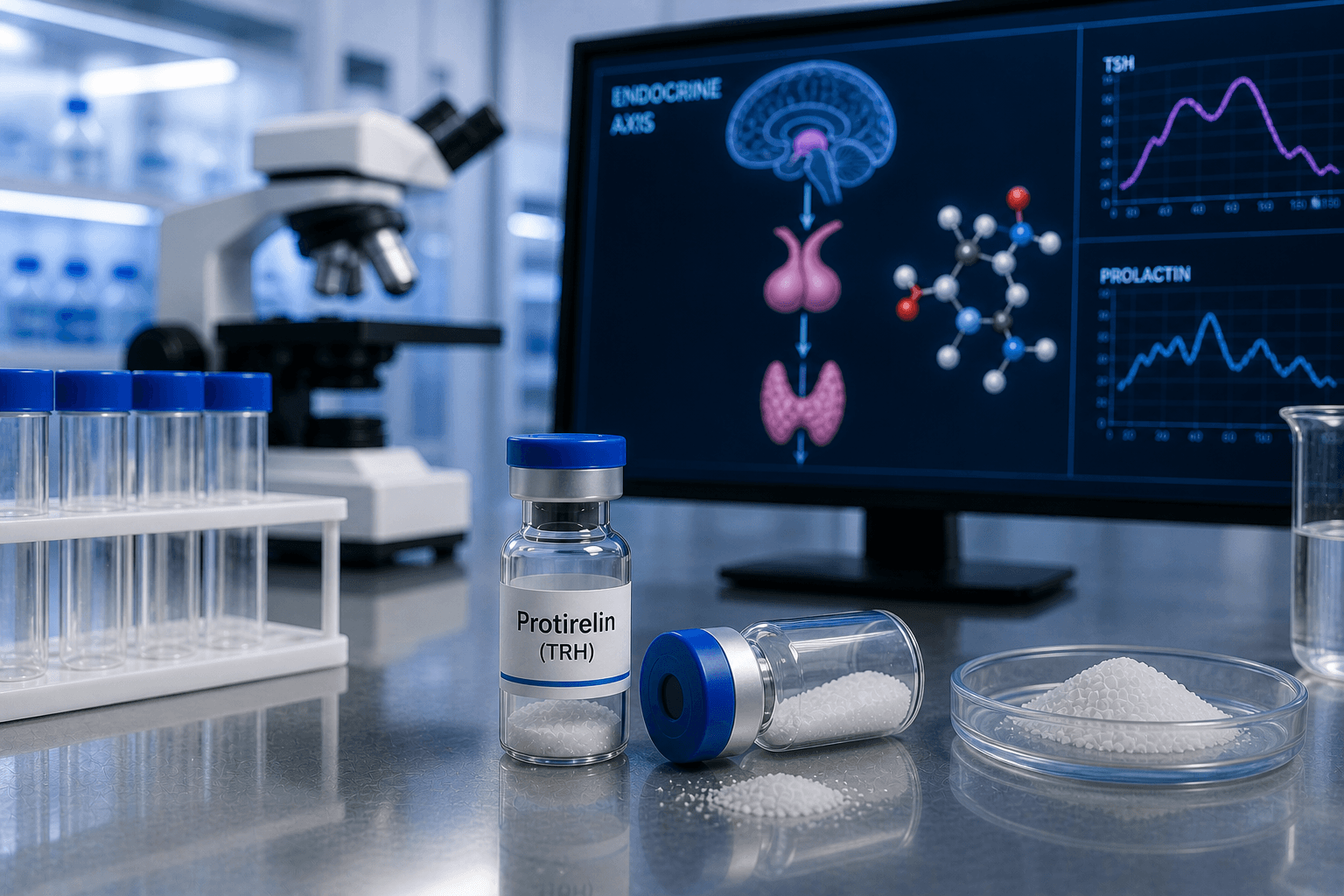
Hypothalamic releasing hormones sit at the apex of the endocrine cascade, controlling output from major hormonal axes. The addition of Protirelin to the Pharma Lab portfolio responds to the needs of endocrinology laboratories seeking a consistent supply of this well-characterised hypothalamic peptide.
Protirelin (TRH)
Thyrotropin-Releasing Hormone is a hypothalamic tripeptide that stimulates the release of thyroid-stimulating hormone and, to a lesser degree, prolactin from the pituitary gland. It is utilised in endocrinology as a diagnostic challenge test to evaluate the responsiveness of the thyroid axis, and as a research tool for investigating the broader neuroendocrine actions of hypothalamic peptides.
Commitment to Research Peptide Quality

All peptides on this page are supplied by Pharma Lab to a minimum purity of 99%, with complex sequences meeting a minimum of 98%. All batches are purified by HPLC and released on the basis of mass spectrometry verification. These are not indicative targets. They are the basic requirements for a batch to qualify to enter the supply chain.
Direct Manufacturer Sourcing
Every compound is sourced directly from licensed manufacturers. Pharma Lab does not purchase from secondary resellers, generic wholesalers, or distributor intermediaries. That direct connection provides visibility into the synthesis process and a level of batch-to-batch consistency that indirect sourcing simply cannot deliver.
A Growing, Curated Range
The range continues to expand as peptide research evolves. New compounds appear in the literature regularly, and established compounds are studied in novel biological systems. Pharma Lab monitors that progress closely and adds products only when supported by genuine research demand. The catalogue is not filled for the sake of size. It is focused on stocking what scientists actually need.
Consistent Quality Across All Products
What makes this range meaningful is not the number of compounds alone, but the consistency of quality applied across every single product. The processes around purity thresholds, analytical verification, sourcing standards, and packaging protocols are the same whether a researcher orders an established compound like BPC-157 or a more recent addition to the catalogue. There are no tiers of quality. Every product meets the same standard.
Multiple Formats Available
Pharma Lab offers peptide products in various presentations including vials, nasal sprays, pre-mixed pens, capsules, topical preparations, and combo packs. This allows researchers to select the delivery format most appropriate for their specific protocol. Supporting consumables, including bacteriostatic water and reconstitution supplies, are also available for a complete and compatible procurement process.
Technical Support
Pharma Lab is open to technical queries about any compound mentioned on this page. Whether you need clarification on product specifications, reconstitution guidance, or help identifying the appropriate peptide format for your protocol, the support team is available. Responses are informed and product-specific, not generic.
Worldwide Shipping
All orders are shipped with tracking and signature confirmation, worldwide. Items are dispatched promptly, with packaging designed to maintain product stability throughout transit. The same delivery standards apply regardless of whether your laboratory is in London, Los Angeles, Sydney, or anywhere else. The global logistics infrastructure of Pharma Lab is designed to deliver research-grade materials reliably, on time, and in the condition expected.
Important Notice
All products provided by Pharma Lab are for research and laboratory use only. They are not intended for human or animal consumption. They must not be classified as drugs, food supplements, cosmetics, or medical preparations. All product data presented on this page is for educational and informational purposes only. Only appropriately trained individuals should handle or use these products in a controlled research environment.